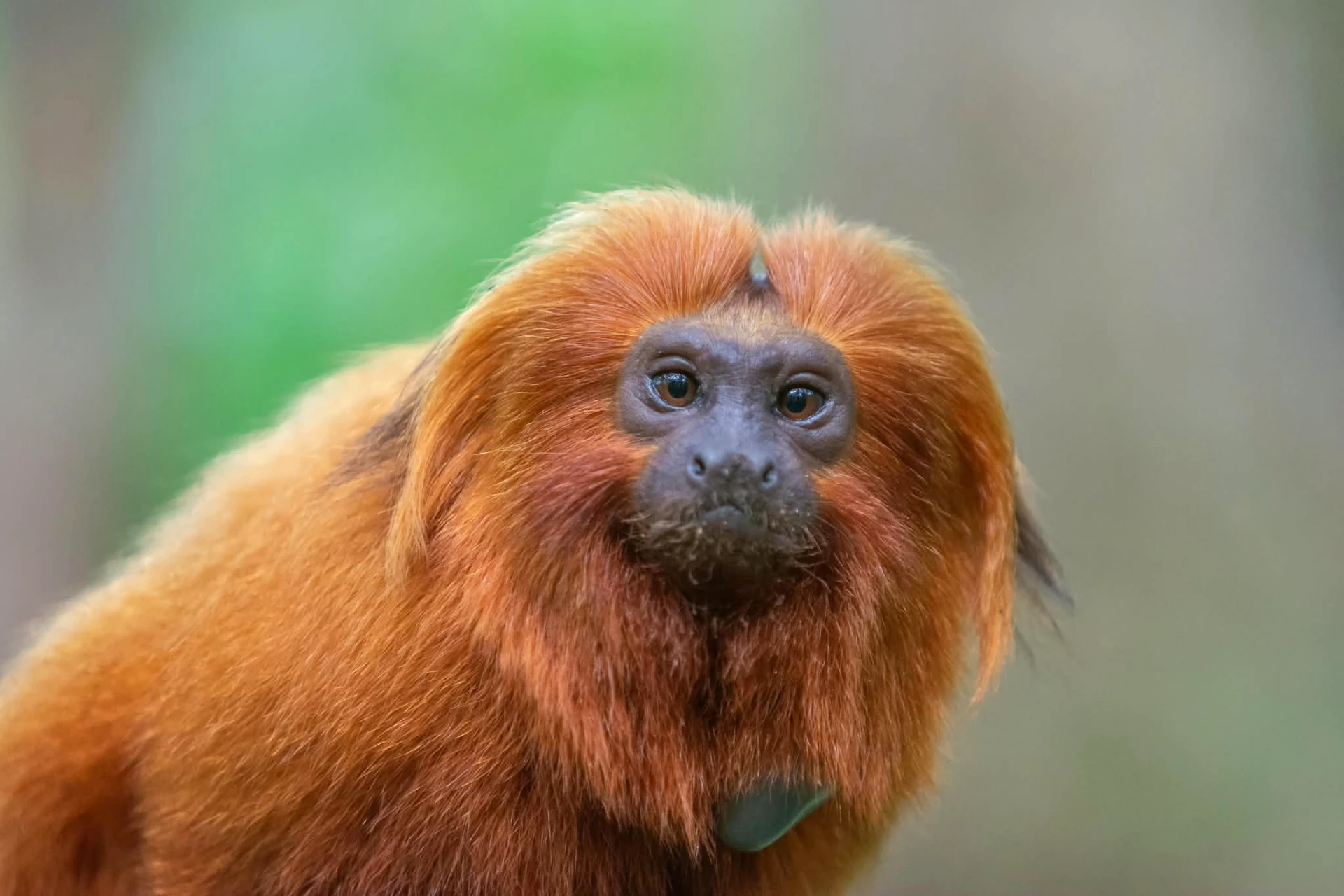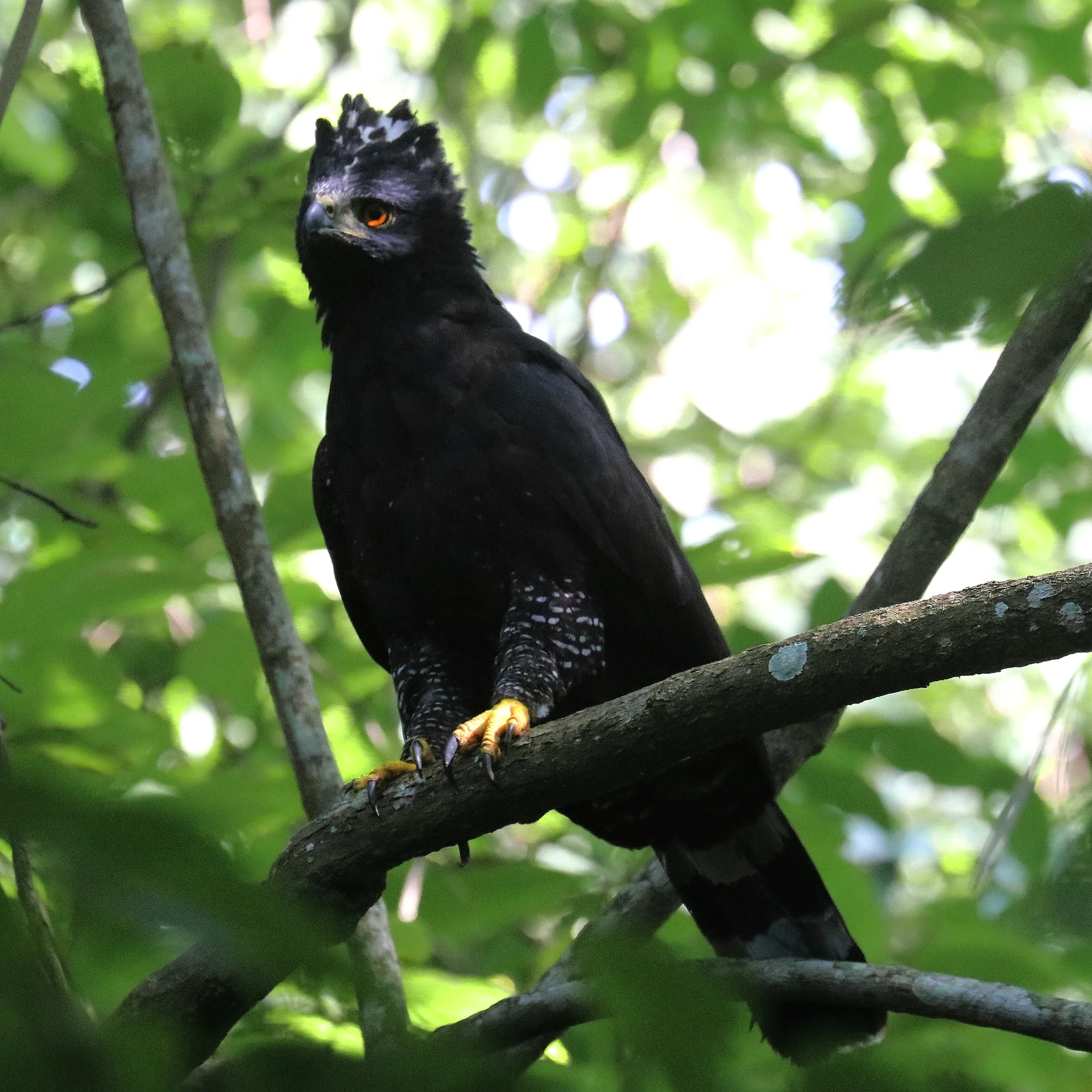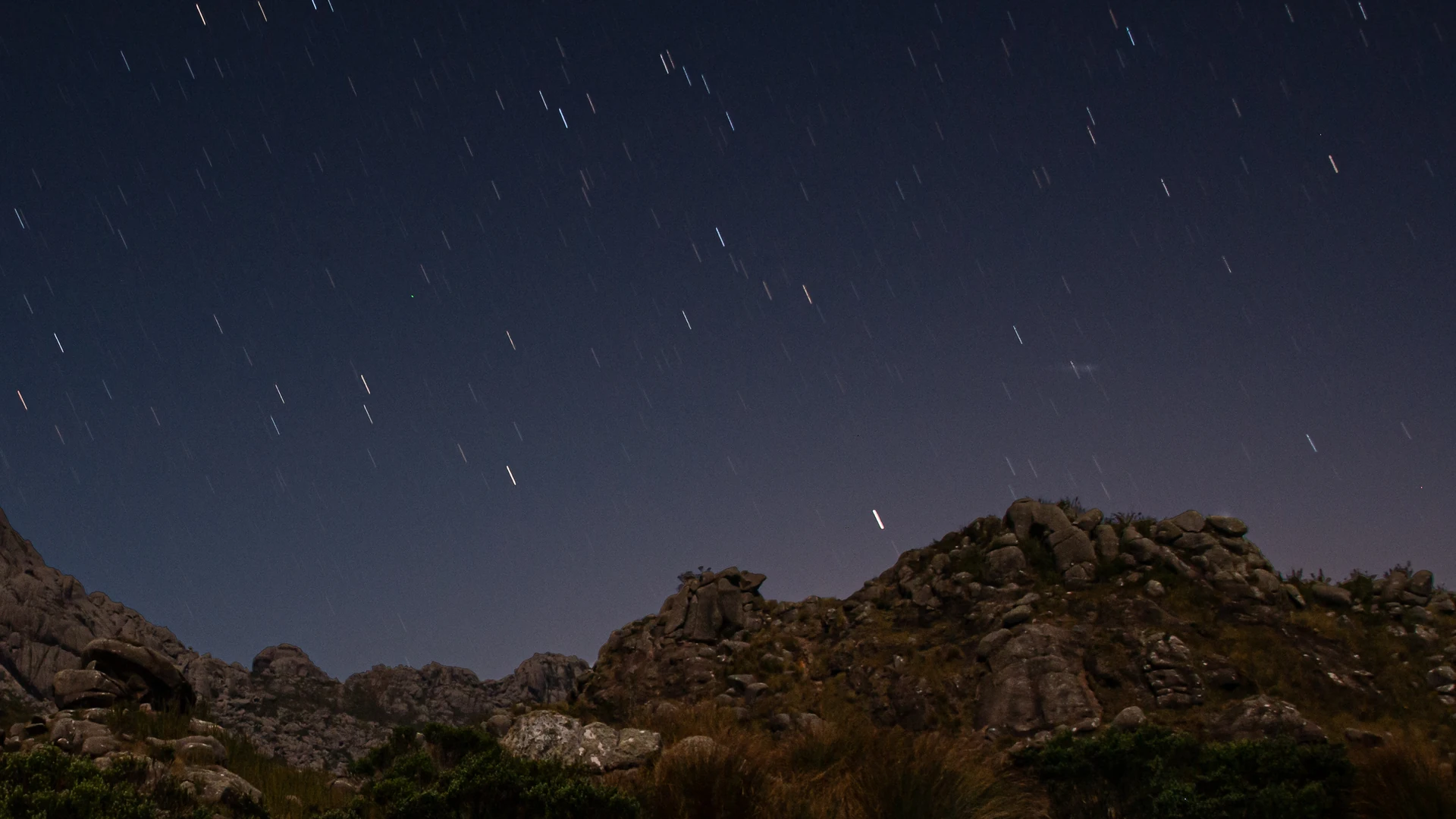
At dusk in the Atlantic Rainforest, there is a changing of the guard. The tanagers go quiet, the toucans settle, and a second forest — louder, stranger, and largely invisible to daytime visitors — takes the stage.
The first sign is sound: tree frogs tuning up by the hundred, a chorus so dense it has texture. Then the night birds: the murucututu owl’s deep boom from the gallery forest, the barn owl’s pale ghost over the clearings, and — the prize — the potoo, the urutau, whose descending wail is the single most haunting sound in the Brazilian night.
On the ground, the cats walk. The ocelot — jaguatirica, the "little jaguar" — is the forest’s spotted shadow: camera traps register them regularly across the corridor, and on night walks their eyeshine, twin amber coals in the torch beam, is more common than most visitors dare hope. Armadillos rustle, pacas freeze at the forest edge, and in the clearings, fireflies rise like slow sparks.
A night walk is not a hike; it is an attendance. Torches low, voices lower, and the forest deciding what to show you. Many guests tell us, afterwards, that the day forest was beautiful — but the night forest was the one that felt true.
✦ Sources & further reading
Our night walks take place in reserves we have worked with for years, including REGUA.
- IUCN Red List of Threatened Species — conservation status of the ocelot and the night species described here · www.iucnredlist.org
- Reserva Ecológica de Guapiaçu (REGUA) — night walks in the Guapiaçu valley — where many of these encounters happen · regua.org