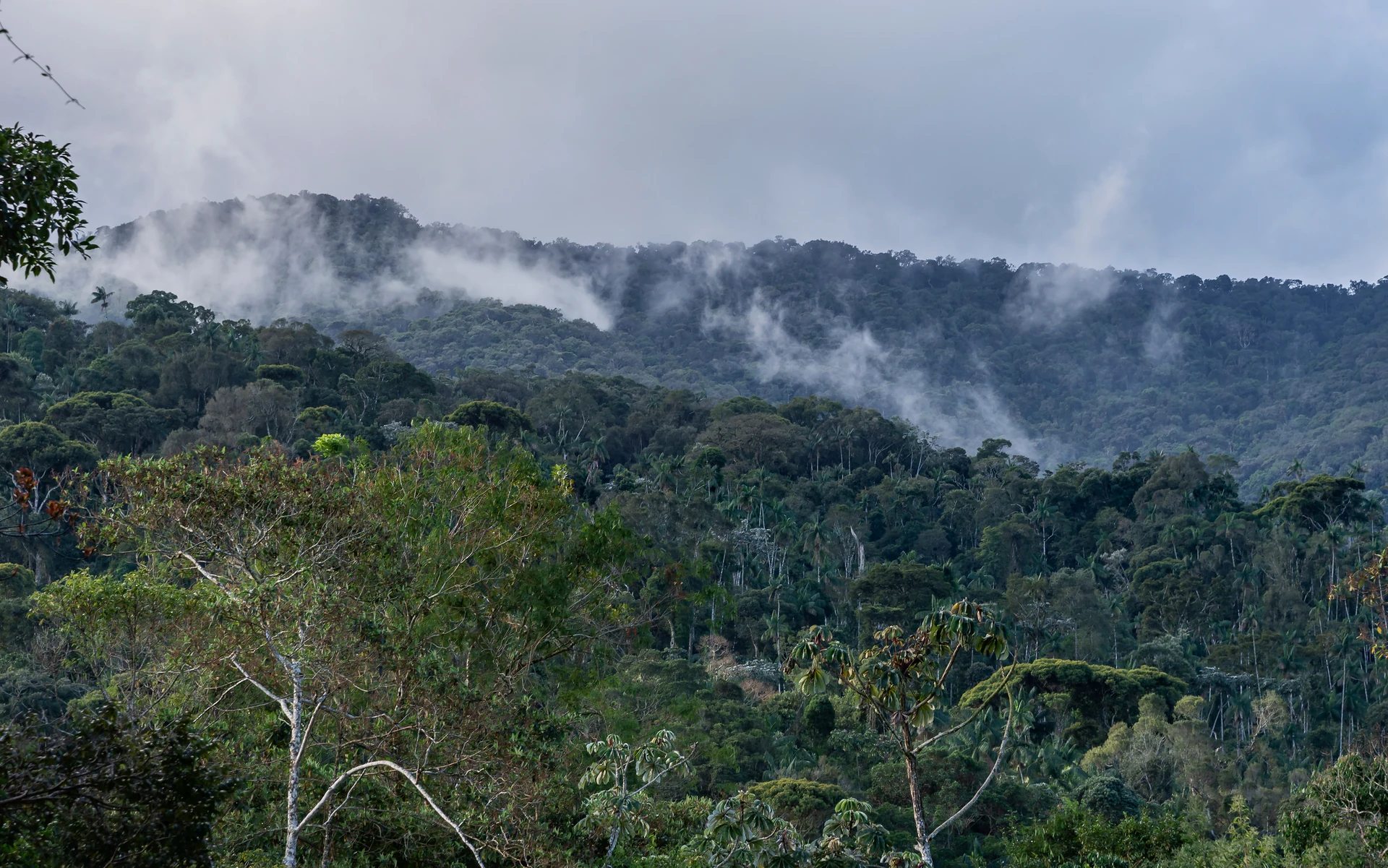
Look up in the Atlantic Rainforest and you will see the forest’s secret architecture: whole gardens growing in the canopy. Epiphytes — plants that live on other plants without taking anything from them — turn every large branch into real estate, and nowhere do they flourish like here.
The bromeliads are the engineers. Their rosettes trap rainwater into private tanks, and each tank becomes an ecosystem: frog nurseries, insect larders, drinking fountains for birds and monkeys. A single large bromeliad is, functionally, a pond suspended in the air.
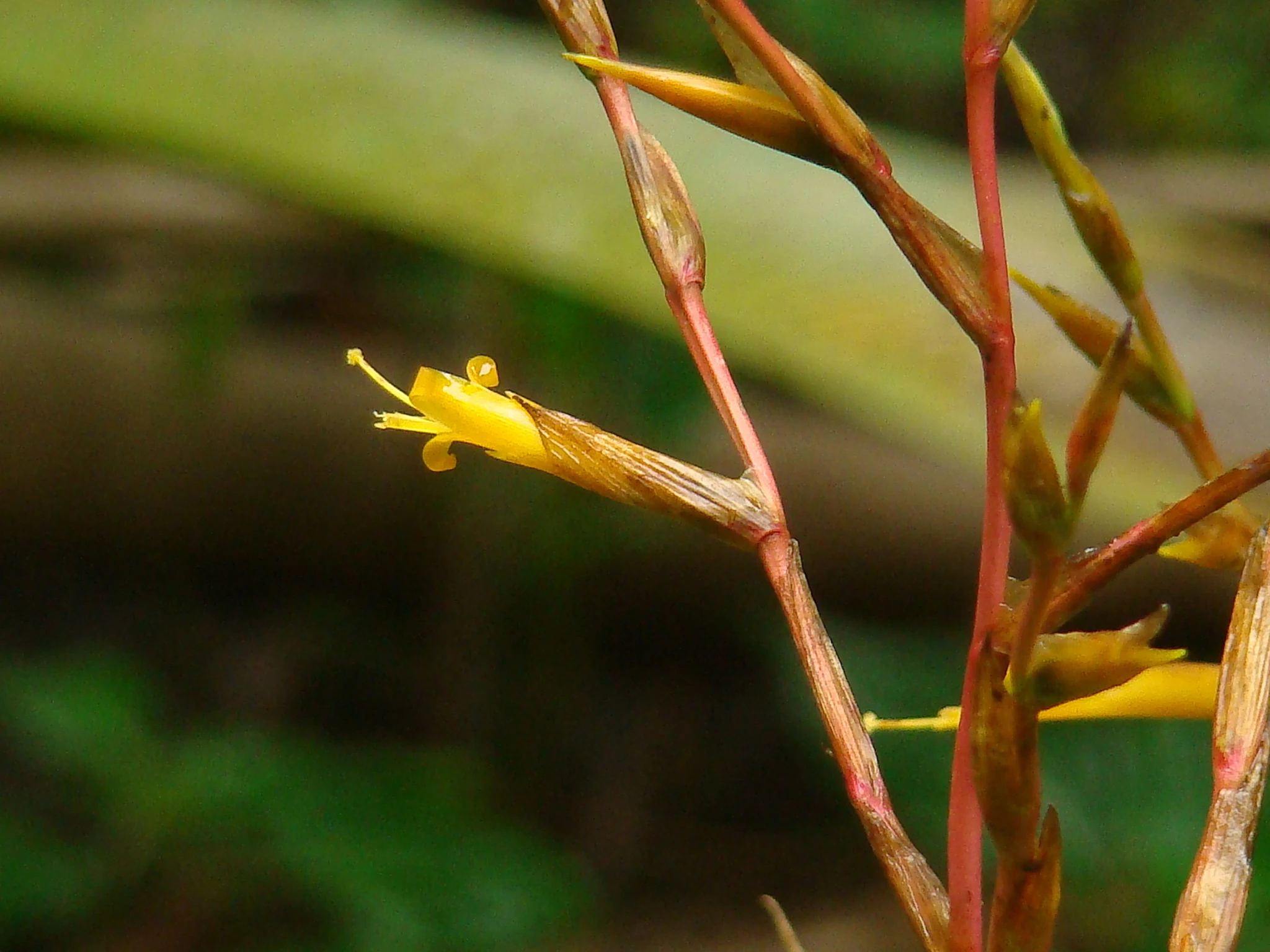
The orchids are the aesthetes. The Atlantic Rainforest is one of the orchid capitals of the world, and in the cooler months the canopy and the shaded slopes bloom with them — cattleyas, oncidiums, and tiny species you need a hand lens to appreciate. Botany-focused mornings on our journeys regularly end with guests flat on a bridge photographing something the size of a thumbnail.
Together, the air-gardens explain the forest’s density of life: the canopy is not a roof but a neighbourhood. And they offer the traveler a final recalibration — in this forest, even the plants have tenants.
✦ Sources & further reading
- Royal Botanic Gardens, Kew — Plants of the World Online — the scientific reference for the bromeliad and orchid families described here · powo.science.kew.org
- Jardim Botânico do Rio de Janeiro — Brazil's historic botanical garden and its Atlantic Forest plant research · jb.rio.rj.gov.br