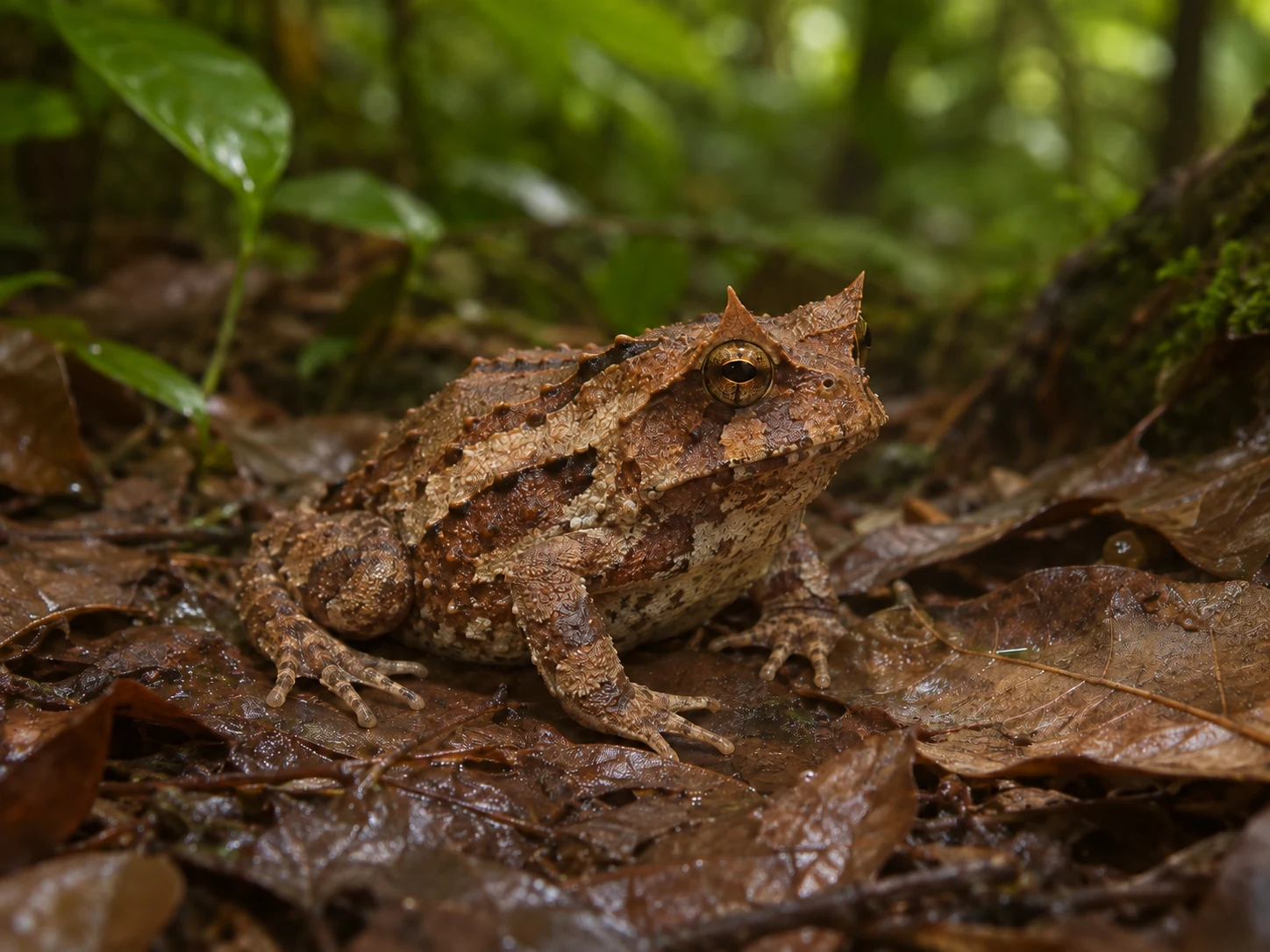
The Atlantic Rainforest is one of the great amphibian hotspots on the planet — hundreds of frog species, an extraordinary share of them found nowhere else. To daytime visitors they are invisible. To anyone who steps into the forest after rain, at night, they are the entire soundtrack.
The chorus is organised like an orchestra. Low in the marsh, the big tree frogs boom. In the mid-storey, smaller species click, trill and whistle. High in the bromeliads — each leaf-tank a private pond — tiny frogs no bigger than a fingernail call with voices absurdly larger than themselves. A good guide can read the night by species, the way a conductor reads a score.
Seeing them is a matter of torchlight and patience: eyeshine first, then the improbable colour — emerald tree frogs on a leaf, orange-bellied species in the leaf litter, glass frogs on streamside vegetation, their hearts visible through translucent skin.
Frogs are also the forest’s accountants. Amphibians vanish first when an ecosystem falters; a loud, diverse chorus at night is the balance sheet of a healthy forest. In the Living Corridor, the nights are very loud indeed.
✦ Sources & further reading
- AmphibiaWeb — the global scientific database of amphibian species and calls · amphibiaweb.org
- IUCN Red List of Threatened Species — conservation status of Atlantic Forest frogs · www.iucnredlist.org